
Discover the heart of the Peruvian Amazon on this 3-day adventure at Refugio Amazonas, a comfortable eco-lodge located deep inside the Tambopata National Reserve. This short yet immersive experience is perfect for travelers with limited time who still want a genuine rainforest encounter.
- Day 01 : Welcome to Tambopata!
- Day 02 : Macaw Clay Lick and Amazon Farm
- Day 03 : Departing from Tambopata
Highlights
- Stay at Refugio Amazonas, an award-winning eco-lodge in the Tambopata National Reserve
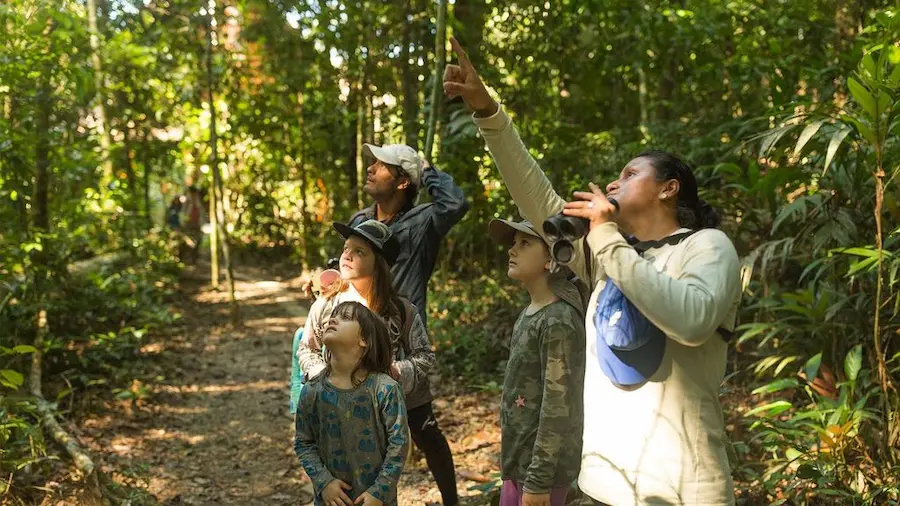
- Guided rainforest walks with expert naturalist guides
- Visit a macaw clay lick and observe vibrant Amazon birdlife
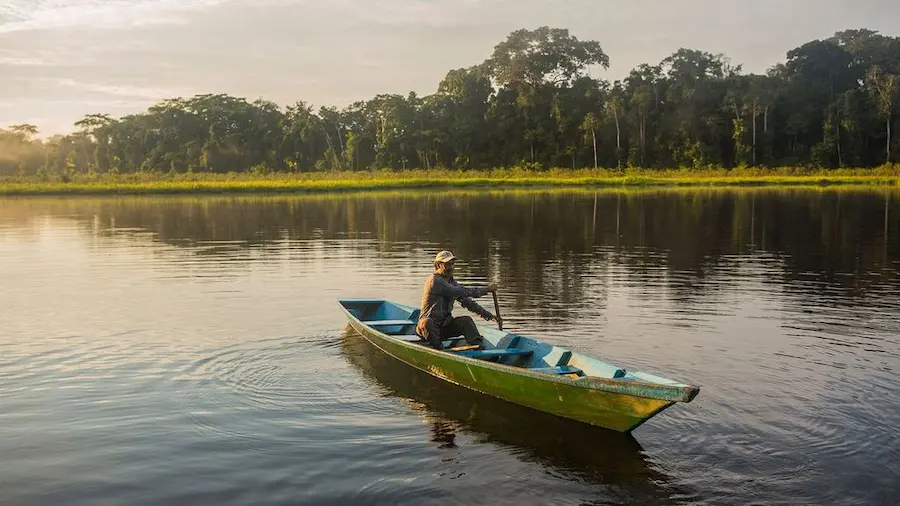
- Canoe excursions along oxbow lakes and rainforest rivers
- Learn about medicinal plants and Amazonian ecosystems
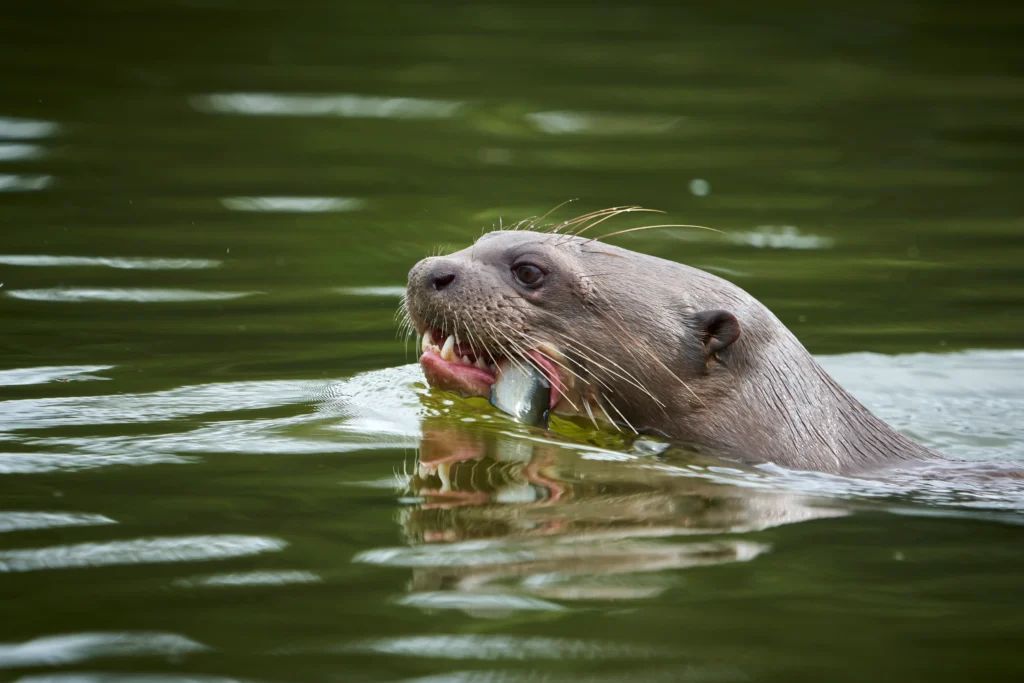
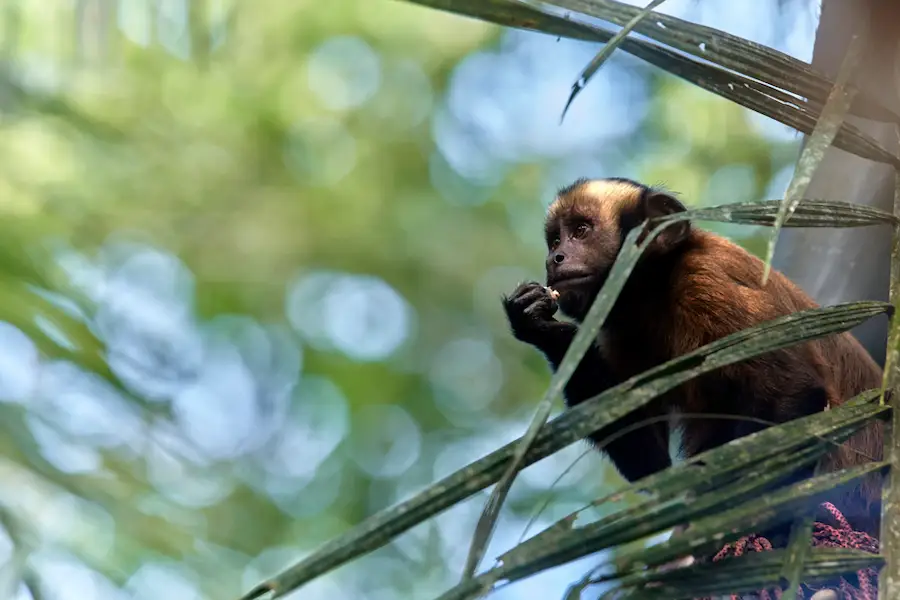
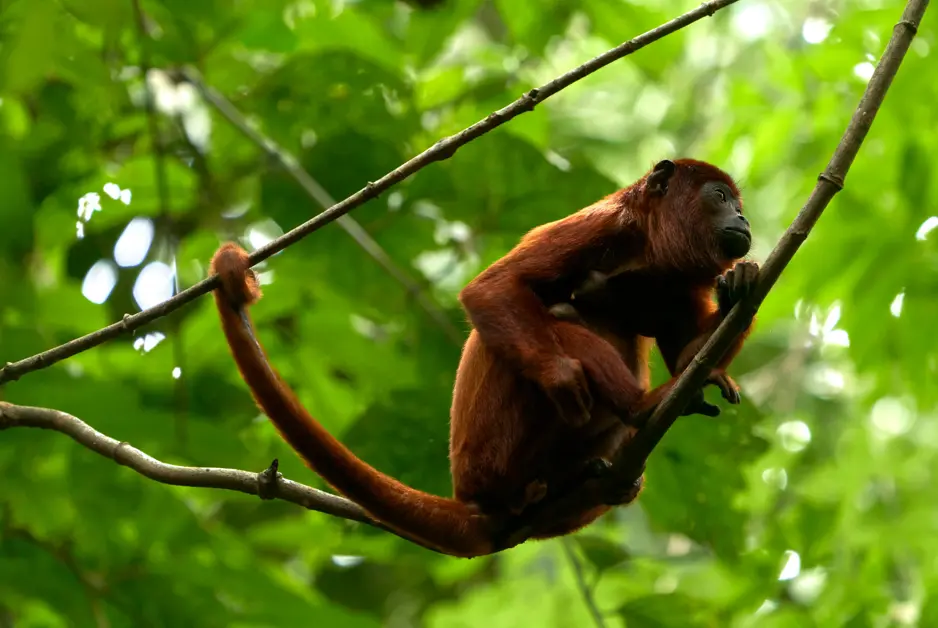
- Excellent chances to spot monkeys, caimans, giant river otters, and tropical birds
- Small-group experience focused on sustainability and conservation
- Perfect short Amazon getaway from Puerto Maldonado
Itinerary
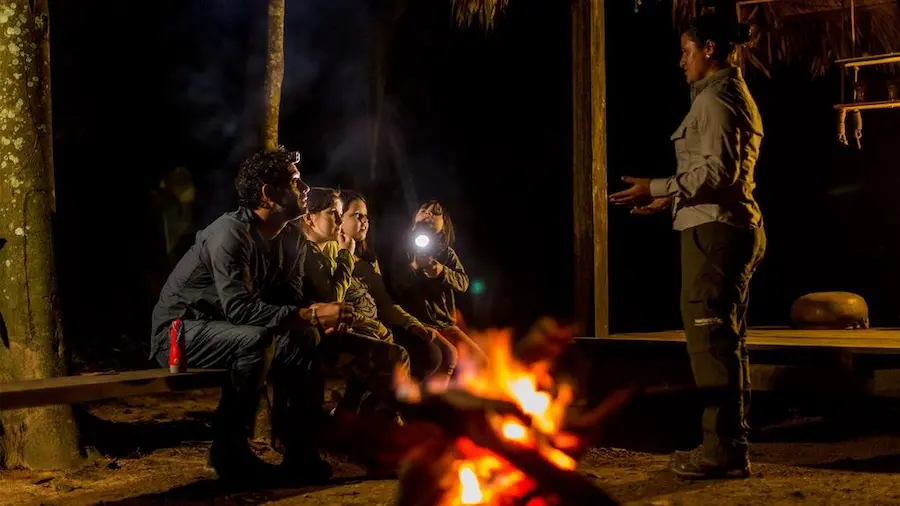
From guided jungle walks to wildlife-rich river excursions, each day brings you closer to the Amazon’s incredible biodiversity. You’ll explore pristine rainforest trails, learn about medicinal plants, spot colorful birds and monkeys, and witness the fascinating behavior of macaws at a clay lick. All activities are led by expert local naturalist guides, offering meaningful insight into one of the most biodiverse regions on Earth.
Ideal as an add-on to Cusco or Machu Picchu, this tour blends nature, comfort, and conservation into an unforgettable Amazon experience.
Upon arrival in Puerto Maldonado, the gateway to Peru’s southern Amazon, the journey continues with a scenic one-hour drive followed by a relaxing boat ride along the Tambopata River. As the landscape gradually transforms into dense rainforest, you’ll enjoy your first introduction to local Amazonian flavors along the way.
Once at the river’s edge, you’ll ascend a staircase — its length changing with the season — and continue with a short walk through lush jungle surroundings. This brief trek sets the tone for your Amazon adventure, offering an immediate immersion into the sights and sounds of the rainforest.
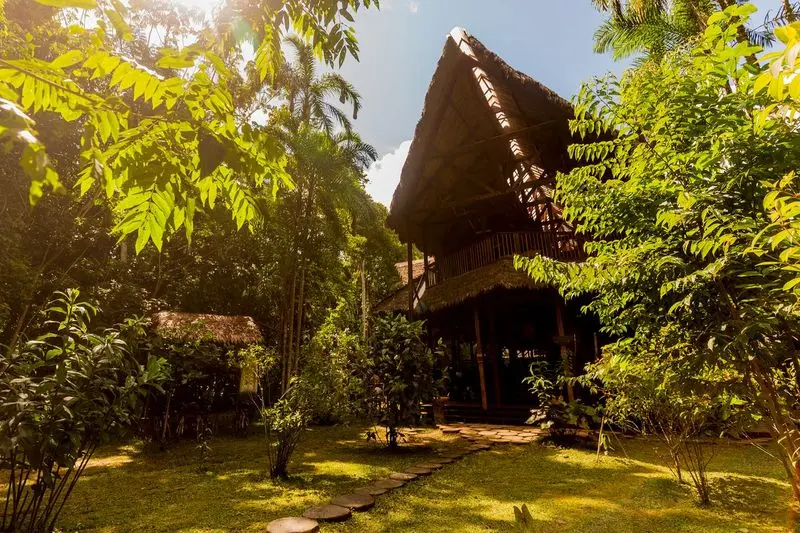
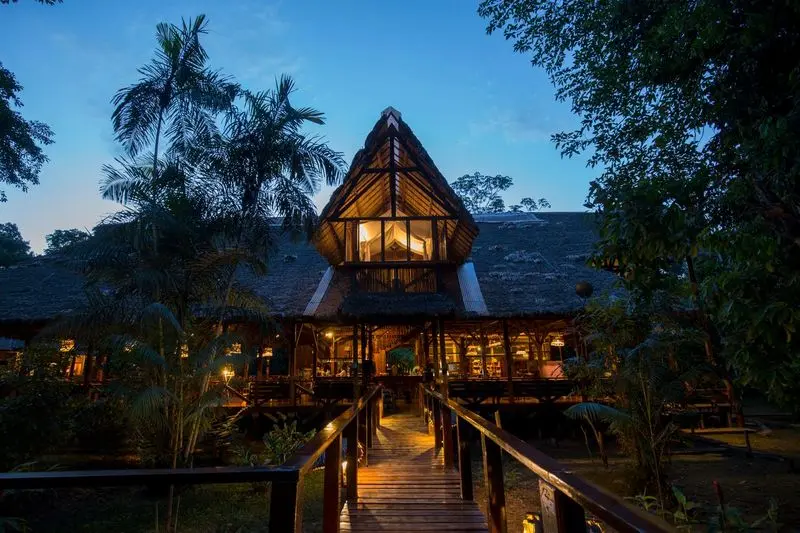
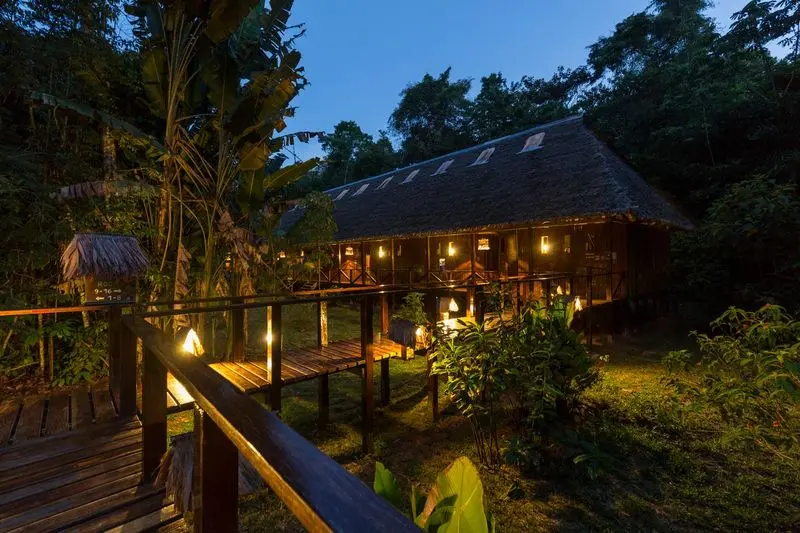
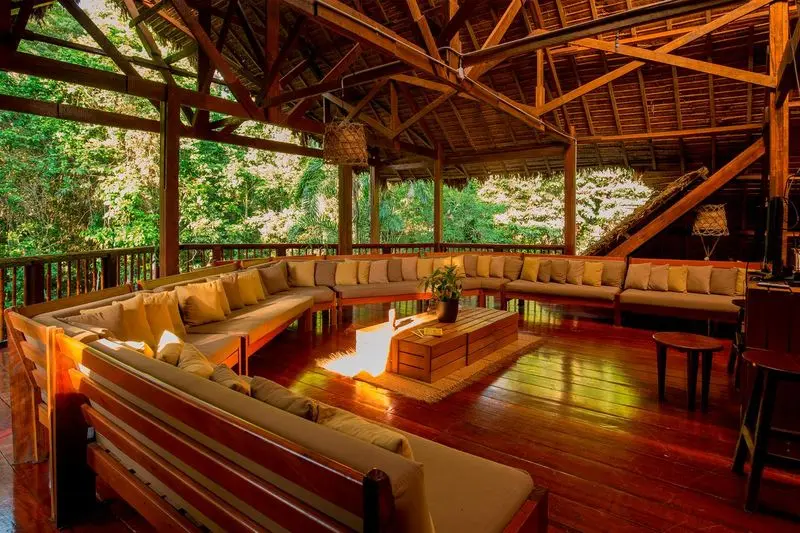
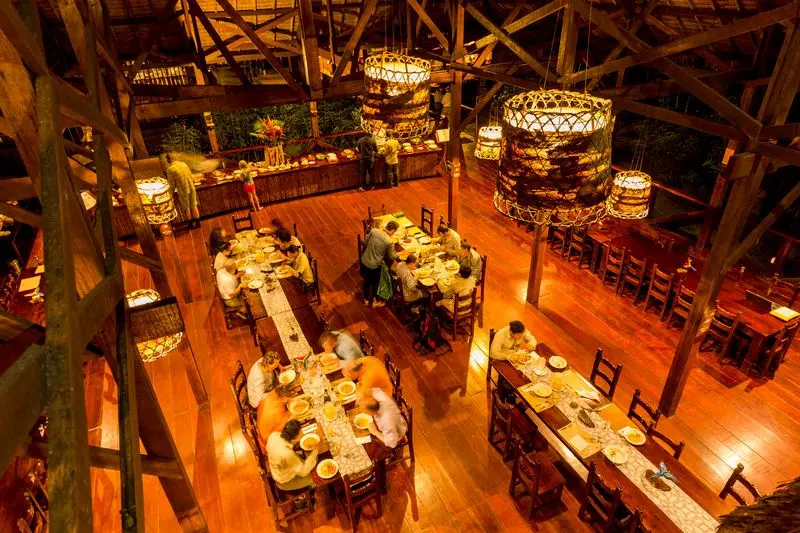
You will then arrive at Refugio Amazonas, an inviting eco-lodge nestled within a pristine chestnut forest. The lodge features comfortable common areas, a bar, dining facilities, and a massage room. It also plays a key role in innovative conservation and citizen science projects, allowing guests to participate in research initiatives focused on wildlife monitoring and rainforest exploration.
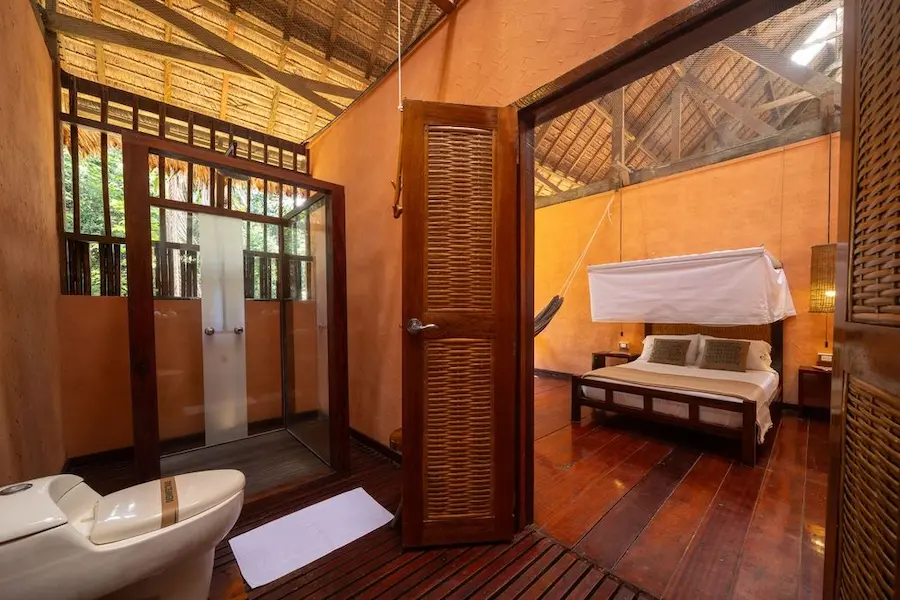
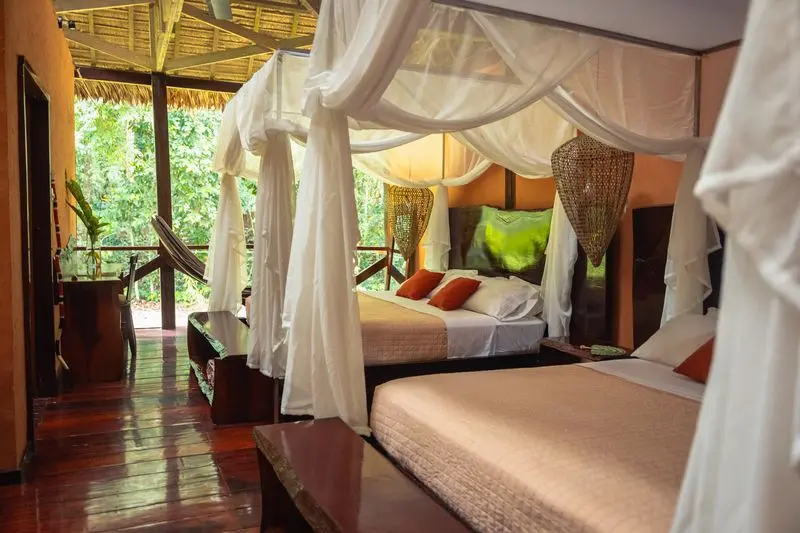
Your accommodation is a spacious 45 m² room, thoughtfully designed for comfort in the jungle. Each room includes mosquito-netted beds, a private bathroom, and large open windows that face the forest, creating a close connection with the surrounding nature.
The experience is fully supported with all meals included, along with tea and coffee, guided activities, airport transfers, and a welcome drink upon arrival. Excursions are led by knowledgeable naturalist guides, with small group sizes to ensure a more personalized and enriching experience.
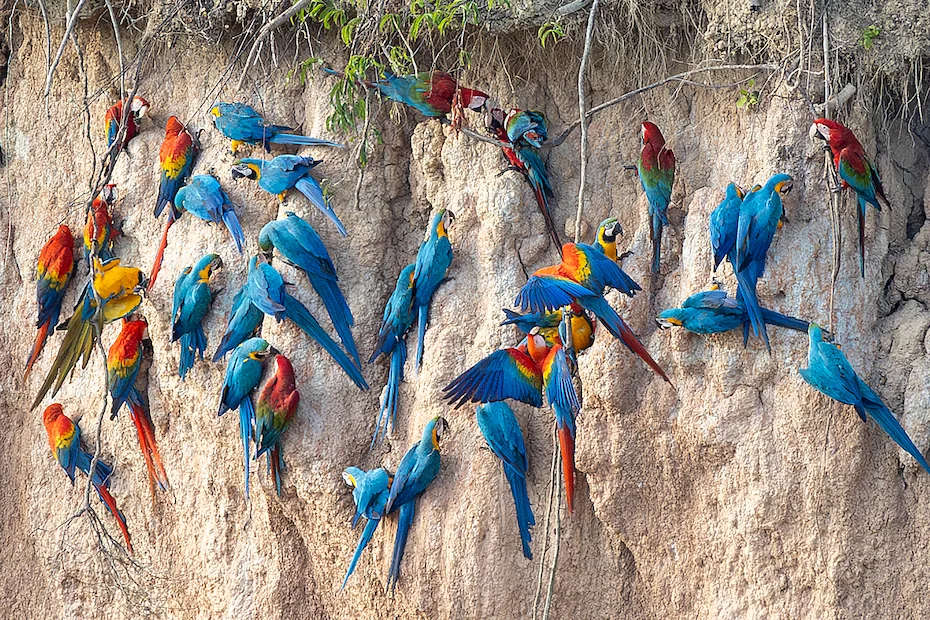
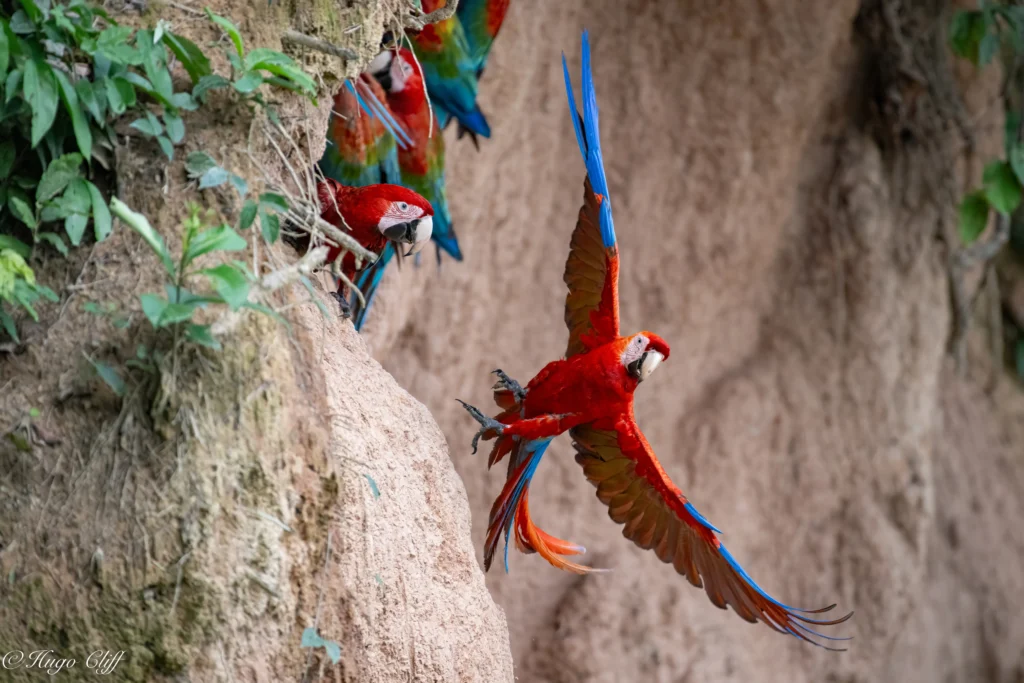
Start the day before sunrise with an excursion to the Macaw Clay Lick, one of the Amazon rainforest’s most remarkable natural events. On clear mornings, the riverbank comes alive as flocks of macaws and parrots gather in a spectacular burst of color and sound. From a discreet observation point, you’ll watch Scarlet, Green-winged, and Blue-and-gold Macaws, along with numerous smaller parrot species, as they feed on the mineral-rich clay during their most active early-morning hours.
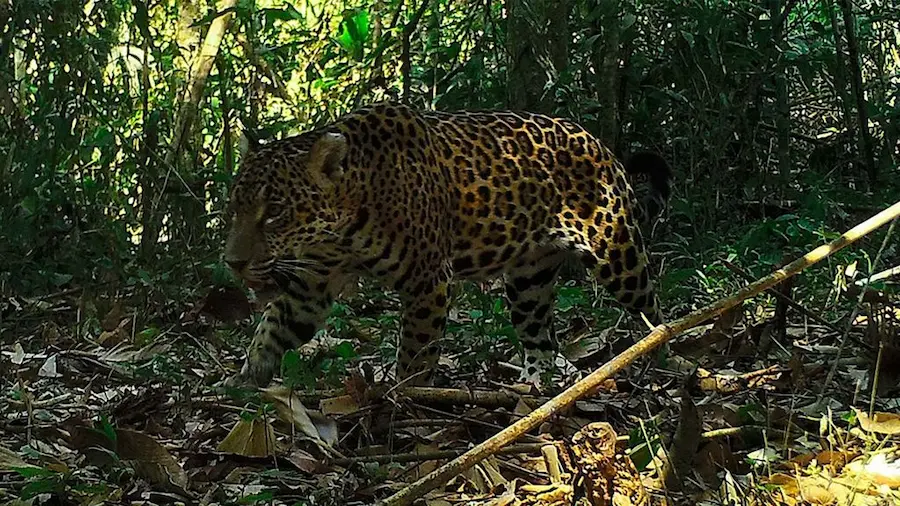
Later in the afternoon, you’ll have the opportunity to join the AmazonCam experience. During this activity, camera traps are carefully placed along forest trails near the Amazon farm, helping capture images of rarely seen wildlife. These recordings contribute directly to ongoing conservation research, offering valuable insight into animal movements and behavior within the rainforest.
Enjoy an early breakfast before departing Refugio Amazonas. Return to Puerto Maldonado for your flight, taking with you unforgettable memories of your Amazon adventure and the satisfaction of contributing to the Wired Amazon program's conservation efforts in the Tambopata National Reserve.
Included
- Airport transfers
- Boat transport to the lodge and for some tours
- Guided tours, max 10 participants
- Room accommodations at the lodge
- Internet at the lodge
- Meals from the lunch on day 1 to the last breakfast on day 3
Not included
- Flight tickets
- Alcoholic beverages
- Laundry
- Gratuities
- Travel insurance
Frequently Asked Questions
- When is the dry season?
Although it can rain at any time of the year, the Tambopata region tends to be drier from May until October. The rains start up in earnest in November and continue until April with the rainiest months usually being November and December. The upsides to visiting during the dry season are trails that aren’t as muddy, little chance of activities being affected by rain, and more macaws and parrots on the clay licks. The downsides to visiting during the dry season are hotter weather, less bird activity on sunny days, more difficulty in finding amphibians, and more travel time on rivers due to low water levels. - Why visit Tambopata eco-lodges during the wet season?
Although you can expect a lot of rain, there will probably be fewer fellow ecotourists (if you like a lot of extra elbow room), it usually rains in the afternoon, it tends to be a bit cooler, and there may be higher bird activity on account of the cloudy weather. The ponds and temporal wetlands that form at this time of the year in the rainforest can also make it easier to find reptiles and amphibians. Parrots and macaws tend to visit more clay licks as they will need the clay for the brain development of their chicks during the first months of the year which coincide with the wet season. Also, the rainy season is fruit and flower season, so wildlife will find food everywhere. - When will I see the most animals?
In all honesty, no month is particularly better to see animals than any other. While you will have more sunlight to see parrots and macaws at the clay lick during the dry season, other animals are encountered with the same frequency no matter what the time of the year. A much bigger factor that comes into play for seeing Amazonian wildlife is the guide’s level of experience and training. From July to September, we have the most jaguar observations along the river banks. - When is the best time to see monkeys?
If you visit lodges such as the Tambopata Research Center, Refugio Amazonas, or Posada Amazonas, you have a very good chance of seeing several monkey species throughout the year. The rollicking calls of Dusky Titis echo from vine tangles, Red Howler Monkeys call from the canopy, and troops of Squirrel Monkeys roam through second-growth near oxbow lakes. Black Spider Monkeys may be a bit easier to find during the wet season because it’s usually easier to locate the fruiting trees they feed on but a good guide will increase your chances of seeing them no matter what the time of the year. - What kind of luggage should I bring?
Your luggage is hand-carried by our staff at various stages of the trip for a long distance. Luggage is restricted to 15 kg per person (33 pounds). You can leave your large luggage in our office at Puerto Maldonado. If you are visiting other destinations in Peru or South America that require different kinds of clothing, you can always pack separate bags and safely leave them at our offices in Puerto Maldonado on the first day so we won’t be carrying them around uselessly. Your bag will be waiting for you at the airport the day you leave.
If you wish to bring additional luggage beyond the permitted amount, an extra fee of $ 70.00 per additional piece will apply.We recommend packing efficiently and bringing only the essentials for your stay in the Amazon.
By traveling light, we reduce our environmental footprint and help preserve the balance of this unique ecosystem. Excess luggage increases fuel consumption during transfers. Packing consciously is a way to support the conservation of the Amazon and ensure that its beauty and biodiversity remain alive for future generations. - What should I pack ?
- Binoculars
- Camera gear, bring your long lens!
- Light-colored, long cotton pants
- Long-sleeved, light-colored cotton shirts
- Ankle-high hiking boots and sneakers
- Flashlight (headlamp) with batteries
- Sunblock lotion
- Sunglasses
- Broad-brimmed hat
- Rain suit or poncho
- Insect repellent
- Small-denomination bills
- Small daypack
- Slippers or sandals for walking around the lodgeHAVE IT ON THE HAND
- Note: Please be aware that the recreational use of drones is not allowed in our lodges. For professional use please contact us to process the required permit.